The recent announcement by U.S. Steel to build a direct reduced iron (DRI) facility in Arkansas has the potential to meet demand among automakers for clean steel, say clean transport advocates. But this hinges on whether U.S. Steel goes a step further and eliminates polluting gas from its new facility, replacing it instead with green hydrogen.
Research shows U.S. automakers want to use clean steel to make their cars but lagging progress from legacy U.S. steelmakers is limiting their ambition. Ford, GM and Tesla have signaled their desire to ramp up clean steel procurement: Ford has signed non-binding MOUs to procure near-zero emissions steel in the European market. Meanwhile, Tesla has disclosed that it is “working with mainstream steel mills for a mid-term transition away from blast furnace production and toward direct reduction without coal that will systematically reduce emissions.” Both Ford and GM have joined the First Movers Coalition global initiative through which they’ve committed to buying 10% near-zero emissions steel by 2030.
European carmakers, such as Volvo, Mercedes and Renault, are already selling EVs which contain clean steel, purchased from European steel makers such as ArcelorMittal and SSAB. U.S. automakers however are currently severely underserved in the U.S. when it comes to clean steel.
Hyundai Steel last year announced a “low-carbon-emissions steel production” project in Louisiana, which will also use a direct reduction furnace. Hyundai has said it plans to transition by 2034 to green hydrogen, a clean method which splits water into hydrogen using electricity – but the company has yet to reveal its plans for sourcing renewable energy, raising concerns about Hyundai’s real intentions on meeting growing demand for clean steel in the U.S.
So far U.S. Steel has not announced any plans for its planned DRI facility in Arkansas to use green hydrogen instead of gas. If the company fails to do so, and Hyundai Steel follows through with its commitment to transition to green hydrogen in Louisiana, U.S. Steel risks seeing its customer base undercut as major customers shift to producers that are able to satisfy growing demand for cleaner materials.
Mighty Earth: Matthew Groch, Senior Director
“A broken watch is right twice a day. While we welcome Nippon’s investment into its subsidiary U.S. Steel on cleaner steelmaking, no one should mistake this for climate leadership. Globally Nippon Steel still runs dirty coal-based blast furnaces, driving massive carbon pollution and harming frontline communities. In the U.S. there is competitive risk with the half-hearted move to clean steel by U.S. Steel, especially if Hyundai Steel manages to deliver on its promises on a green hydrogen DRI mill in Louisiana. Why would a U.S car maker buy ‘kind of clean steel’ when it can get a better product?”
Iliana Paul, Deputy Director of Sierra Club’s Industrial Transformation campaign
“We hope Nippon Steel will stay true to its commitment to invest in ‘modern, efficient’ steelmaking by investing in the long-term competitiveness and cleanliness of U.S. Steel facilities across Indiana, Pennsylvania, Illinois, and Minnesota, as well as in Arkansas. Steelworkers have worked too hard and fenceline communities have been overburdened for too long to be cheated out of the benefits of high-quality union jobs in green steel mills that keep communities healthy. The demand is there among car makers for clean steel, Nippon Steel needs to step up and deliver.”
Roger Smith, Asia Lead at SteelWatch
“While the news of the DRI facility in Arkansas is a potential bright spot of progress, it falls short of being a truly “green transition” as the facility will use fossil gas as a reductant with no announced plans for a transition to green hydrogen. Nippon Steel has to start making better decisions and start planning a proper transformation out of coal in its global operations so it can responsibly become ‘the best steelmaker’ it wants to be.”
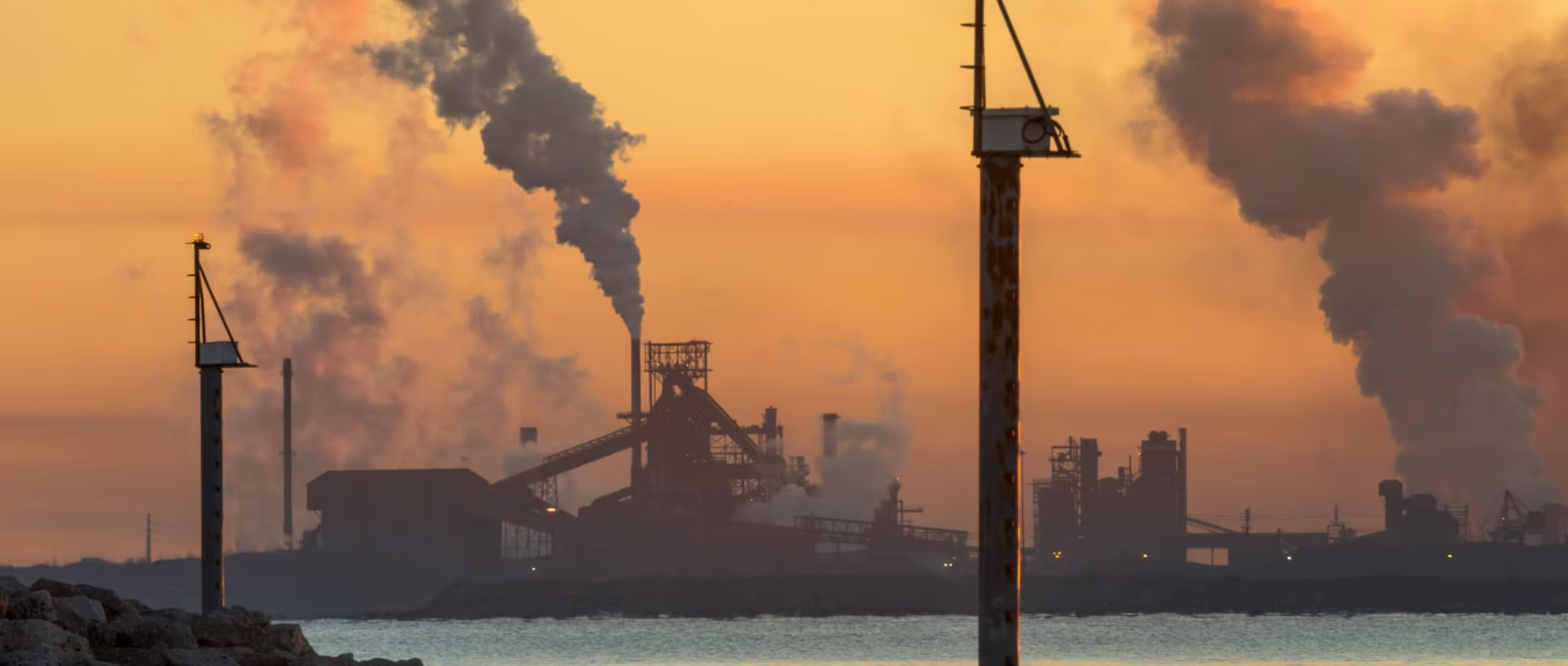
The automotive sector is the largest source of demand for coal-based steel products in the U.S. Air pollution from the coal-based steel supply chain in the U.S. is responsible for more than 890 premature deaths, $13 billion in health costs, and almost 100,000 missed days of work and school every year.
By converting to fossil-free steel, automakers can eliminate up to 27% of ‘embodied’ emissions associated with manufacturing a new vehicle, according to the International Council on Clean Transportation.