China’s expanding renewable-energy capacity creates opportunities for industrial decarbonisation, but connecting that supply with industrial demand remains a challenge. Grid constraints and mismatches between electricity generation and consumption contribute to wind and solar curtailment in some regions. Meanwhile, deeper decarbonisation of steelmaking requires greater electrification supported by reliable renewable electricity.
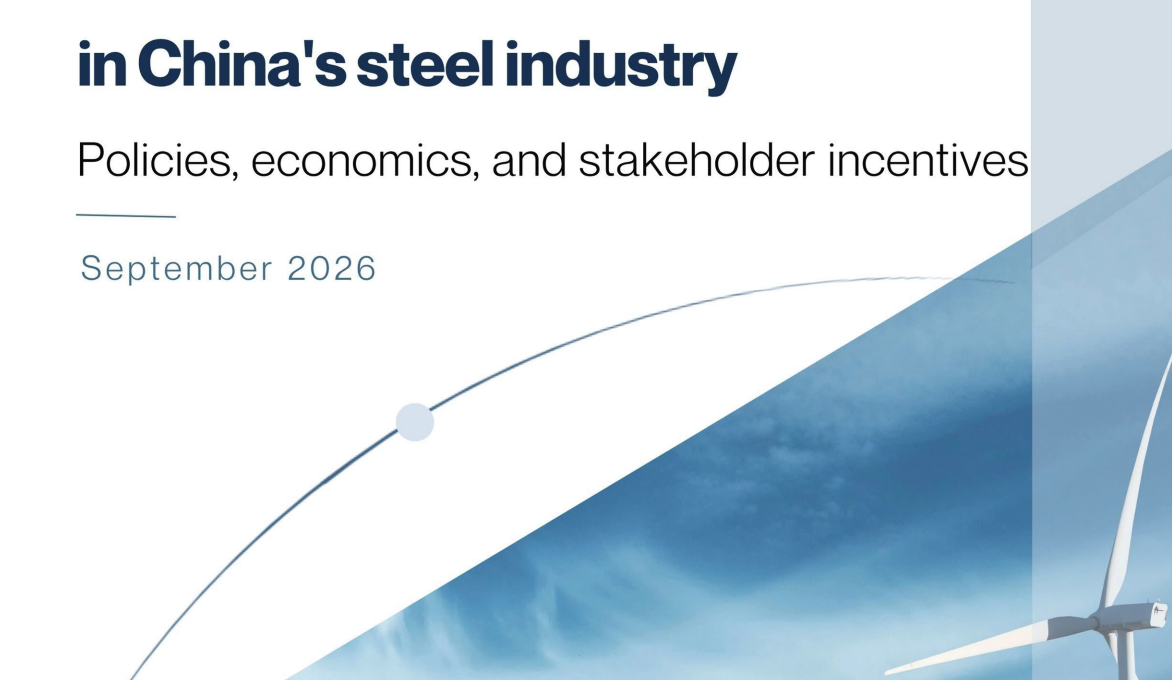
Earth & Life Symbio (E&L)’s new report examines whether green electricity direct connection can help bridge this gap. Combining policy analysis, stakeholder perspectives and an 8,760-hour techno-economic model of self-built projects in six Chinese cities, it assesses the conditions under which dedicated renewable-power connections can offer a viable option for steelmakers and energy providers.
A project-specific opportunity
China’s green electricity direct-connection framework allows steelmakers to source renewable power through dedicated lines. This can strengthen the connection between renewable generation and industrial consumption, but its economic value depends on local conditions.
The report’s central finding is that physical direct connection offers a narrow, project-specific opportunity. Viable projects require suitable renewable resources near the plant, a strong hourly match between generation and steelmaking demand, and sufficient electricity savings to cover investment in generation, storage and dedicated lines, alongside the costs of retaining grid support.
Strong wind and solar resources alone do not guarantee competitiveness. Local grid electricity prices, the timing and cost of residual grid purchases, and applicable grid-service charges all influence the business case. Project assessment therefore needs to consider the complete electricity-supply arrangement.
Higher renewable shares involve economic trade-offs
The report models scrap-based electric arc furnace operations across six cities, comparing grid-connected renewable-share targets of 30%, 50%, 70% and 90%, alongside a fully off-grid scenario.
Among the grid-connected targets tested, the full levelised cost of self-consumed green electricity is lowest at 30% in each city’s lowest-annual-cost configuration. Increasing the renewable share requires additional generation and storage capacity to cover periods when wind and solar output fall short of demand.
However, the cost of each green kilowatt-hour differs from the steelmaker’s total electricity cost. Higher renewable shares also replace more grid purchases, meaning the lowest overall electricity cost can occur at a higher share. The balance depends on local electricity prices and when the plant still needs to purchase power from the grid.
The fully off-grid scenario raises costs further. Without public-grid support, generation and storage must meet demand in every hour of the selected weather year, including prolonged periods of low renewable output. The modeled off-grid systems are consequently considerably more expensive than grid-connected alternatives.
These findings demonstrate the economic value of grid support and the importance of assessing renewable shares alongside total costs and supply reliability.
Making third-party investment viable
The report also examines arrangements in which an energy provider finances and owns renewable assets, supplying a steel plant through a long-term power purchase agreement or energy-management contract.
Such arrangements can reduce steelmakers’ upfront capital requirements, but the agreed electricity price must provide both customer savings and adequate returns for the provider. Cheap grid electricity can leave limited room to recover project investment, while higher-price markets may offer generators more attractive alternative sales opportunities.
Suitable sites and development rights near steel plants can present further constraints. Providers must also assess the steelmaker’s long-term operating outlook and payment reliability, since reduced production, delayed payments or closure can undermine project revenues.
The report explores contractual approaches that better align these interests, including pricing structures supporting earlier investment recovery and partnerships connecting renewable-electricity supply with purchases of low-carbon steel for energy infrastructure.
For policymakers, steelmakers and energy developers, the research provides a framework for identifying suitable projects and understanding the policy, operational and contractual conditions needed to make them viable. It shows how direct connection can support steel decarbonisation where renewable resources, industrial demand and commercial incentives align.